What began with a book for the Rio Earth Summit grew, over the years, into a wide body of publications, lectures and contributions to public debate. Stephan Schmidheiny wrote some texts himself; for others, he served as co-author, as a sounding board during their development, or contributed a foreword. Whether the subject was sustainable development, eco-efficiency, financing change, corporate responsibility or economic policy reform, the aim was always the same: to formulate convictions in a way that let others carry the thinking further.
His influence was not confined to the written word. As a speaker at universities, international conferences and in economic policy debates, he put forward positions that were often ahead of their time and not infrequently met with controversy. Some of his contributions found broad agreement; others sparked heated debate. What united them was the aim of questioning entrenched patterns of thought and bringing new perspectives into the discussion.
For ideas do not take effect simply by being conceived. They must be explained, defended, and repeatedly brought back into public discourse. Once something has been written or spoken, it begins to take on a life of its own, often reaching far beyond its original occasion and its author.
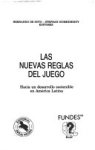
The New Rules of the Game: Towards Sustainable Development in Latin America
Las nuevas reglas del juego marks an early milestone in Stephan Schmidheiny's engagement with sustainable development. It emerged from a dialogue with Hernando de Soto, one of Latin America's most influential economists. De Soto (b. 1941) founded the Institute for Liberty and Democracy (ILD) in Lima around 1980, a think tank dedicated to formalising property rights in developing countries. De Soto gained international recognition with El Otro Sendero (1986) and later The Mystery of Capital (2000), which has been translated into more than twenty languages. His central argument is that, without formal property rights, assets in developing countries remain locked up as “dead capital” – since they can neither be used as collateral nor invested productively.
Together, the authors argue that long-term prosperity depends not only on capital and resources, but equally on functioning institutions, clear property rights and entrepreneurial initiative. The work thus connects de Soto's thinking on property and informal economies with Stephan Schmidheiny's early vision of a sustainable development perspective for Latin America.
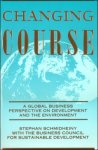
Changing Course: A Global Business Perspective for Development and Environment
For the United Nations Earth Summit in Rio de Janeiro in 1992, Stephan Schmidheiny brought together more than 50 leaders of international business in the Business Council for Sustainable Development (BCSD). The resulting book, Changing Course, was the first to show comprehensively how economic growth, business success and environmental protection could be reconciled. By introducing the concept of eco-efficiency, the book shaped the international debate on sustainable development and remains a landmark of sustainable business leadership to this day.
Praise for the Book
“The book developed by Schmidheiny and the BCSD, Changing Course: A Global Business Perspective on Development and the Environment, has become required reading for enlightened business leaders in the 1990s; it lays out the path for the future of environmental entrepreneurship.”
William K. Reilly, Administrator of the U.S. Environmental Protection Agency (1992), in “The Road from Rio”.
“The question is no longer whether business must change to meet the challenges of the global environment, or even when. The issue of the 1990s is how, and Changing Course lays out the most forward-looking guideline in print for harnessing the resources of the modern corporation to the task of environmentally sustainable development. This timely book is nothing less than a roadmap to the corporate future.”
James Gustave Speth, President of the World Resources Institute, later Dean of the Yale School of the Environment
Changing Course was included by the Cambridge Institute for Sustainability Leadership in its list of the 50 most influential sustainability books.
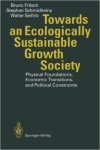
Towards an Ecologically Sustainable Growth Society: Physical Foundations, Economic Transitions, and Political Constraints
Towards an Ecologically Sustainable Growth Society brings together in a single book three disciplines that are rarely considered together: economics, physics and international business practice. This combination is reflected in its authors. Bruno Fritsch (1926–2009), Professor of Economics at ETH Zurich, was one of the early pioneers of thinking on global environmental and development issues; the physicist Walter Seifritz contributed the scientific perspective on energy and thermodynamic limits; Stephan Schmidheiny added the entrepreneurial view of economic change. This deliberate bringing-together of disciplines produced a work that set out to answer a fundamental question: Is sustainable development possible at all — and if so, how can it be achieved?
The authors’ answer is as sober as it is demanding: sustainability is subject to the laws of physics, to the limits of energy, matter and entropy. At the same time, sustainability must meet the requirements of economic efficiency. Where many debates pit growth and ecology against each other, the book argues that the two can only be conceived together: a “sustainable growth society” is therefore not a contradiction in terms, but a design challenge whose physical, economic and political conditions must be met simultaneously. With this work, Stephan Schmidheiny extended the entrepreneurial approach of his bestseller Changing Course (1992) with a scientifically grounded intellectual framework.
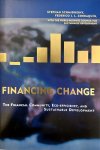
Financing Change: The Financial Community, Eco-efficiency, and Sustainable Development
Four years after Changing Course, Stephan Schmidheiny, together with the Argentinian entrepreneur Federico J. L. Zorraquín, turned his attention to the players who decide where capital flows. Financing Change was written within the framework of the World Business Council for Sustainable Development (WBCSD) and was the first to examine systematically whether financial markets – stock and bond markets, banks and insurance companies – support sustainable development, and whether they should. Its publisher, MIT Press, described the work as the very first study on the subject.
In separate chapters, the book gives a voice to the key players in the financial world: company directors, investors and financial analysts, bankers, insurers, accountants and rating agencies. Drawing on their perspectives, the authors derive a central demand: environmental risks and opportunities must be factored into valuation on financial markets and into corporate financial planning as a fundamental variable. This turned eco-efficiency, the guiding concept of Changing Course, into a financially relevant factor. The book stands at the beginning of a development that, under the terms sustainable finance and ESG, is now standard practice in the financial industry.
What others have said:
“Based on the content of this important book, financial institutions started to look for opportunities with regard to environmental and social issues.” Olaf Weber, University of Waterloo, in “Sustainable Banking – History and Current Developments” (2013)
“The first study to examine questions that will become increasingly important as populations burgeon and the developing countries enter financial markets.” From the publisher’s description, MIT Press
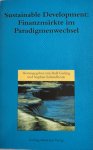
Sustainable Development: A Paradigm Shift in the Financial Markets
With the publication of Sustainable Development: Financial Markets and the Paradigm Shift, Stephan Schmidheiny turned his attention to a force that would prove decisive for the future of sustainable development: global finance. Together with Rolf Gerling, he argued that lasting change could not be achieved through governments, businesses, or technological innovation alone. It would also depend on how capital is allocated, how risks are assessed, and how economic success is defined.
The book challenged the prevailing view that financial markets exist solely to maximize short-term returns. Instead, it advanced the idea that banks, investors, and financial institutions have a broader responsibility in shaping the direction of economic and social development. Capital, the authors argued, is not merely a measure of value. It is a powerful instrument that influences which technologies, industries, and ideas are able to grow.
Long before concepts such as ESG investing, sustainable finance, and impact investing entered the mainstream, the book highlighted the financial relevance of environmental and social challenges. Climate change, resource scarcity, and environmental degradation were presented not only as societal concerns but also as material risks for companies, investors, and the stability of the global economy.
At the same time, the authors challenged the perceived divide between profitability and sustainability. Rather than seeing environmental responsibility as a constraint on economic growth, they portrayed it as a driver of innovation, resilience, and long-term value creation.
In doing so, Sustainable Development: Financial Markets and the Paradigm Shift became an early call for a reorientation of the financial sector, from a passive observer of global change to an active force in shaping a more sustainable economy.
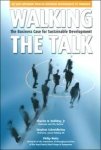
Walking the Talk: The Business Case for Sustainable Development
Ten years after Changing Course and the Rio Earth Summit, three leading figures of the World Business Council for Sustainable Development (WBCSD) took stock: Charles O. Holliday, Chairman and CEO of DuPont, Philip Watts, Chairman of the Royal Dutch/Shell Group, and Stephan Schmidheiny, founder of the WBCSD. Walking the Talk was published in the run-up to the 2002 UN World Summit on Sustainable Development in Johannesburg. With it, business came before the international community not with declarations of intent, but with evidence that sustainable business works in practice.
Drawing on some 70 examples of companies from every region of the world, the authors show that the three pillars of sustainable development – economic growth, ecological balance and social progress – improve both business results and quality of life. The book organises these experiences into ten “building blocks”: functioning markets, the right policy framework, eco-efficiency, corporate social responsibility, learning to change, partnerships, informing consumers and providing choice, innovation, reflecting the worth of the Earth, and making markets work for all, including the poorest. Its core thesis is captured in a single sentence: “Business cannot succeed in failing societies.”
With Walking the Talk, Stephan Schmidheiny played a key role in shaping the idea of a “business case” for sustainability: sustainability was no longer seen as a cost factor or a matter of image, but as an integral part of corporate strategy. The book completes the arc that began with Changing Course in Rio and extended to the financial markets with Financing Change.
What others have said:
“‘Changing course’ was the message of the book published by Stephan Schmidheiny for the Earth Summit in 1992. Ten years on, Stephan Schmidheiny, Chad Holliday and Philip Watts demonstrate how a number of leading companies have started to ‘walk the talk’. I hope that the concrete examples provided in this book will catalyze the necessary change of course in the millions of companies that still continue with business as usual.” Dr Klaus Töpfer, Executive Director, United Nations Environment Programme (UNEP)
“For me, the appearance of the World Business Council for Sustainable Development (WBCSD) was one of the most important unofficial outcomes of the Rio Summit in 1992. […] Walking the Talk demonstrates that we are all sitting in the same planetary boat.” Dr Claude Martin, Director General, WWF International
“Evolving an economic system consistent with the laws of nature is the challenge of our times. […] Walking the Talk is an important next step in the beginnings of a very long journey.” Peter M. Senge, MIT and Society for Organizational Learning
“This book shows us that the most successful companies will be those that achieve sustainable development through learning from the marvelous mechanism of nature and power of life – Nature’s Wisdom – and innovate accordingly.” Dr Shoichiro Toyoda, Honorary Chairman, Toyota Motor Corporation